Learning Outcomes
i. Define what a neuron is and its role in the nervous system.
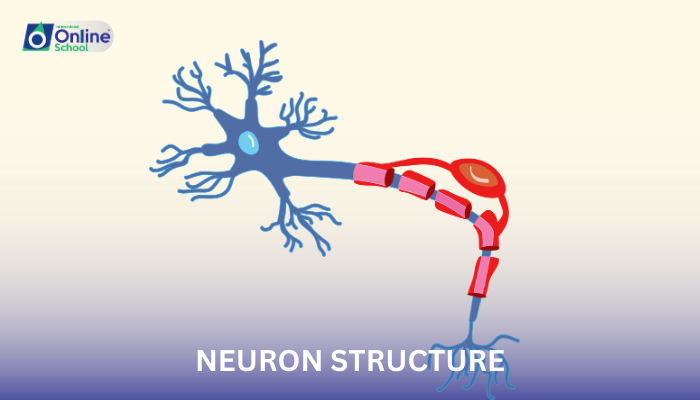
ii. Describe the structural components of a neuron, including the cell body, axon, dendrites, and synapses.
iii. Understand how the structure of a neuron facilitates the transmission of electrical signals.
i. Definition of a Neuron: A neuron, or nerve cell, is the fundamental unit of the nervous system responsible for transmitting information throughout the body in the form of electrical and chemical signals.
ii. Structural Components of a Neuron
Cell Body (Soma): Contains the nucleus and organelles; it is the metabolic centre of the neuron.
Axon: A long, slender projection that conducts electrical impulses away from the cell body towards other neurons or effectors.
Dendrites: Short, branched extensions that spread out from the cell body and receive signals from other neurons.
Synapses: Specialised junctions where the axon terminal of one neuron communicates with another neuron or effector cell.
iii. Transmission of Electrical Signals
Action Potentials: Neurons transmit information via action potentials, which are rapid changes in the membrane potential that travel along the axon.
Chemical Neurotransmission: When the action potential reaches the synapse, it triggers the release of neurotransmitters, which cross the synaptic gap and bind to receptors on the next neuron, continuing the signal transmission.
Integration: The neuron integrates incoming signals from other neurons at the cell body and dendrites, determining if the threshold for firing an action potential is reached.
In conclusion, the neuron's structure is intricately designed to facilitate the efficient transmission of electrical signals. Each component of the neuron plays a specific role in the communication process, with dendrites receiving incoming signals, the cell body integrating the information, the axon conducting the signal, and the synapses transmitting signals to other cells. Understanding the structure of neurons is essential for appreciating how the nervous system processes and responds to complex information from both the internal and external environments.
